Leaking breasts
This article was created with

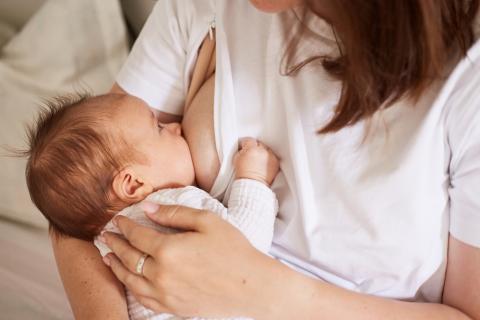
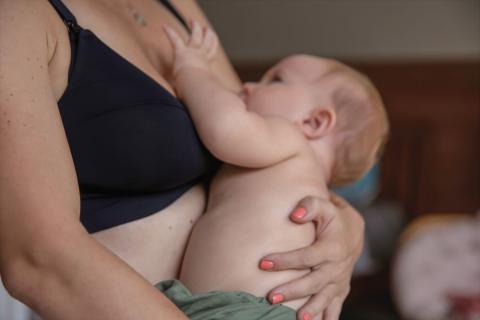
It’s perfectly normal for your breasts to leak while you are breastfeeding. When your milk first comes in, you might find you leak a lot but as time goes on your milk will regulate itself and it will become less of a nuisance.
Jump to a section in this article
What to do if your breasts leak
If this is happening to you, NHS Infant Feeding Advisor Gina has some reassuring advice.
Back to top
What are the symptoms?
It’s perfectly normal for your breasts to leak while you are breastfeeding. It happens most in the early days when your breasts are full or when your "letdown reflex" is activated by something making your body think that it's breastfeeding. It can also be an emotional response – some women report their breasts leaking when they hear their baby crying. Every breastfeeding mum will have some story about their breasts leaking – it happens to everyone. Try packing a spare T-shirt for yourself in your changing bag in case you need it when you're out and about.
If you find you’re leaking a lot, you may be producing too much milk – our page on oversupply of milk has more advice.
Back to top
The solution
There’s no exact way to stop your breasts leaking. If you are feeding whenever your baby shows signs of hunger then this will help your breasts adapt to make the exact amount of milk your baby needs, and using breast pads will help stop milk leaking onto clothing and ensure nobody notices. For most mums, leaking stops as their bodies get used to breastfeeding. If you are leaking overnight, you might want to put a towel underneath so you don’t have to worry about washing your bed sheets every night.
Back to top
You might also be interested in
')
})
// Links in Content block handler
jQuery(document).on('click','.article-content a', function (e){
e.preventDefault();
let thisId = jQuery(this).attr('href').substring(1)
let topPos = jQuery('.article-wrapper h2[id=' + thisId + ']')
jQuery('html, body').animate({scrollTop: topPos.offset().top - 100}, 1000);
})
}
// **** Tips handler
// Hide Read more button if text lines are less than 3
jQuery(".tip-item-text").each(function (){
var container = jQuery(this);
var lineHeight = parseInt(container.css('line-height'), 10);
var containerHeight = jQuery(this)[0].scrollHeight;
var lines = containerHeight / lineHeight;
lines <= 3 ? jQuery(this).siblings('.reveal-full-text').hide() : '';
})
// Show full text
jQuery(document).on('click','.reveal-full-text',function (e) {
e.preventDefault();
jQuery(this).closest('.para-tip-item').addClass('full-text-visible')
})
// *** Slider - Related articles
let s = document.createElement("script");
s.type = "text/javascript";
s.src = "/themes/ud/js/slick/slick.min.js";
jQuery("head").append(s);
jQuery('.pc-slider-cnt').slick({
slidesToShow: 4,
slidesToScroll: 1,
loop: false,
infinite: false,
variableWidth: true,
// infinite: false,
prevArrow: jQuery('.related-articles .prev-btn'),
nextArrow: jQuery('.related-articles .next-btn'),
responsive: [
{
breakpoint: 1200,
settings: {
slidesToShow: 3,
}
},
{
breakpoint: 992,
settings: {
slidesToShow: 2,
}
},
{
breakpoint: 769,
settings: {
slidesToShow: 1,
}
}
]
})
// Get visible text height
// jQuery.fn.visibleHeight = function() {
// var elBottom, elTop, scrollBot, scrollTop, visibleBottom, visibleTop, height;
// scrollTop = jQuery(window).scrollTop();
// scrollBot = scrollTop + jQuery(window).height();
// elTop = this.offset().top;
// elBottom = elTop + this.outerHeight();
// visibleTop = elTop < scrollTop ? scrollTop : elTop;
// visibleBottom = elBottom > scrollBot ? scrollBot : elBottom;
// height = visibleBottom - visibleTop;
// return height > 0 ? height : 0;
// }
//Check length of 'Next article' components - if more than 1 set other styles
jQuery('[class*=article-block]').length < 2 ? jQuery('.previous-article-block').addClass('single-next-article') : '';
})
 Activities & Play
 Behaviour
 Childcare
 Children's rights
 Development & Growing Up
 Family, Friends & Relationships
 Feeding Your Baby
 Food & Eating
 Health & Safety
 Mental Health & Wellbeing
 Money & Work
 Online Behaviour & Safety
 Pregnancy & First Days
 School & Education
 Sleep
Sleep



 Pregnancy & First Days
 Sleep
Sleep